
Loading
Retail security is as much about customer service and shrinkage prevention as it is about response. Our retail guards are trained to spot theft, defuse disputes and still greet customers properly.
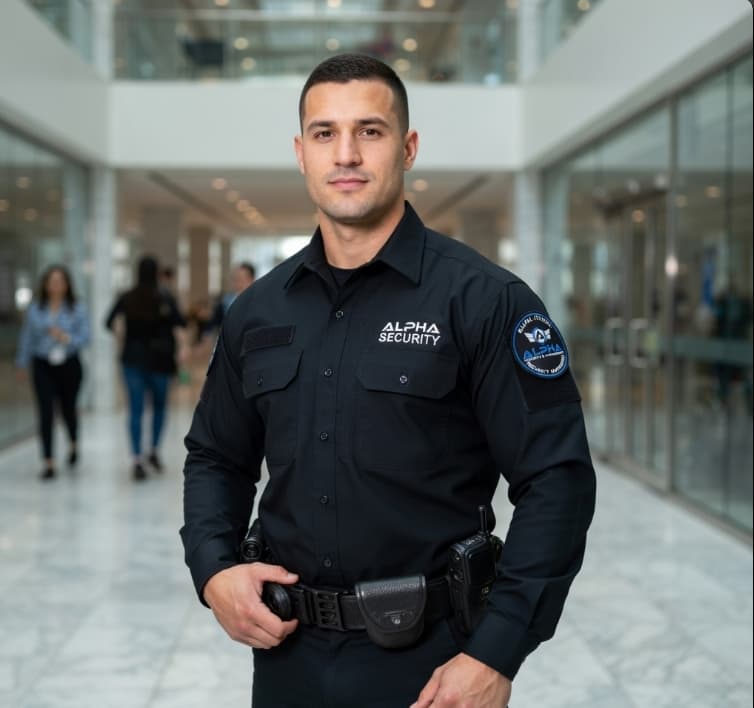
Retail security lives or dies on the first thirty seconds of contact. A uniformed guard at the front door who greets every customer by eye deters casual theft before it starts, and the plain-clothed loss prevention operator on the floor catches the organised crews that came in ready to lift. We run both, usually as a pair, because one without the other leaves half the store uncovered. For shopping centres and arcades we coordinate with centre management and NSW Police local commands so our incident reports slot straight into the centre's broader intelligence file. Back-of-house cover is where a lot of retail shrinkage actually happens, delivery docks, staff rooms and stockrooms are on the same patrol route rather than an afterthought.
A uniformed guard holds the entry lane and greets customers, while a plain-clothed operator works the aisles watching for the signature behaviours of organised retail theft. The back-of-house is swept every hour during delivery windows. Apprehensions are done inside a private office with a manager witness, never on the shop floor, and NSW Police are called if the value crosses the threshold the store has set.
Every store gets a site run sheet covering the trading hours, the high-loss categories, the known repeat offenders, the opening and closing sequence, and the store manager's preferences on when to call police versus trespass notice. Plain-clothed operators are rotated across stores so they do not become recognised, but uniformed staff stay with a single site so customers get a familiar face.
An end-of-shift report is emailed within 4 hours of knock-off with theft attempts, trespass notices issued and any customer dispute logged. CCTV stills are pulled for any named incident. A fortnightly pattern report highlights repeat offenders and the days and times theft peaks, which feeds directly into the roster for the following fortnight.
Retail staff hold a current NSW SLED Class 1A licence. Plain-clothed loss prevention operators additionally carry the NSTA Auburn (RTO 32292) short course on observation, surveillance and lawful apprehension, run in-house, so every operator is working to the same evidence standard our lawyers can defend if an apprehension is challenged.
Retail pricing depends on whether staff are uniformed or plain-clothed, peak-hour staffing ratios and total roster hours across the engagement. Bulk-hour contracts across multiple stores get a blended rate. Written quote within 24 hours, no peak-trading surcharge at Christmas or EOFY.
Both. Uniform deters, plain clothes catch. Most stores run a mix across peak hours.
Yes. Our retail staff can lock up, arm the alarm panel, and hand off to mobile patrols overnight.
A supervisor is on call with a standby list of retail-trained staff. Replacements are dispatched within the hour and the store manager is notified in writing.
Typed up with CCTV stills and emailed to the store manager within 4 hours of shift end, with a separate police liaison note if one is needed.
On-site uniformed guards for buildings, retail, hotels and corporate offices.
ViewMarked vehicles checking your Sydney site through the night on a randomised schedule.
ViewLicensed crowd controllers for venues, festivals and private events across Sydney.
ViewTalk to a director directly. Written quote within 24 hours, often same day.
Commonly deployed on: Retail